Our leaders
How did the president stack up?
The same yardstick for every president, Reagan through Trump II. Start with the economic report card, then the accountability record below it: investigations and what they produced, plus corruption and money in politics.
★ Do they actually work for us? The presidential report card →
One card per president, Reagan through Trump II, graded on every part of the job, with the 0–100 number in the open and the proof one tap away. New · draft scoring.
So who actually did the best job?
We rank every president 1st through 8th on each of six measures, income, jobs, unemployment, inflation, debt, and poverty. No judgment calls: just who had the best number and who had the worst. Then we average the ranks.
A lower average rank = better overall. A rank of 1 means they had the best number of any president on that measure; 8 means the worst.
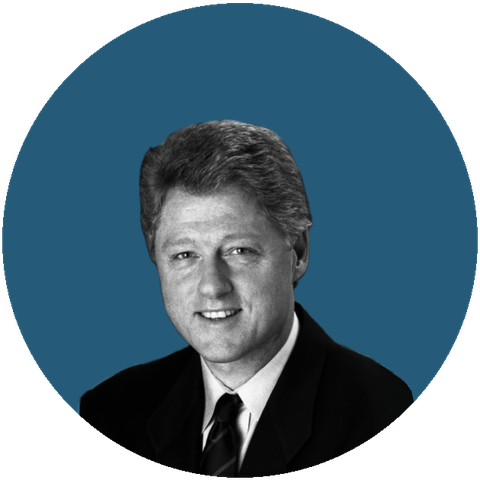
#1 Clinton
93–01 · Democrat
Top of the class on most measures. Ranked in the top 3 on 5 measures, bottom 3 on 0.
Context: Mild recession ending. Dot-com boom, NAFTA.

#2 Reagan
81–89 · Republican
Mixed record, some wins, some losses. Ranked in the top 3 on 3 measures, bottom 3 on 1.
Context: Stagflation, 10.8% unemployment, 13.5% inflation. 1981-82 recession, Cold War.

Mixed record, some wins, some losses. Ranked in the top 3 on 2 measures, bottom 3 on 1.
Context: Worst financial crisis since Depression, 800K jobs/month losses. Slow recovery, Sandy Hook, rise of ISIS.
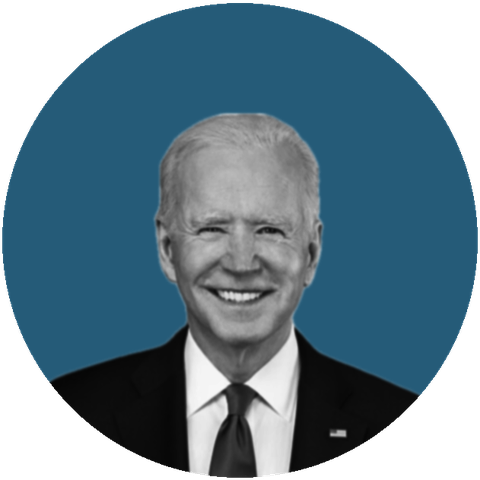
Mixed record, some wins, some losses. Ranked in the top 3 on 3 measures, bottom 3 on 1.
Context: Pandemic, 6.4% unemployment, vaccine distribution beginning. Inflation surge, Ukraine war, Jan 6 aftermath.

#5 Trump I
17–21 · Republican
Below average on most measures. Ranked in the top 3 on 3 measures, bottom 3 on 3.
Context: Strong economy, low unemployment (4.7%). COVID-19 pandemic.
#6 Trump II*
25–now · Republican
Below average on most measures. Ranked in the top 3 on 1 measure, bottom 3 on 2.
Context: Low unemployment (4.1%), high prices, cooling inflation. Iran conflict, tariff escalation, DOGE federal cuts.
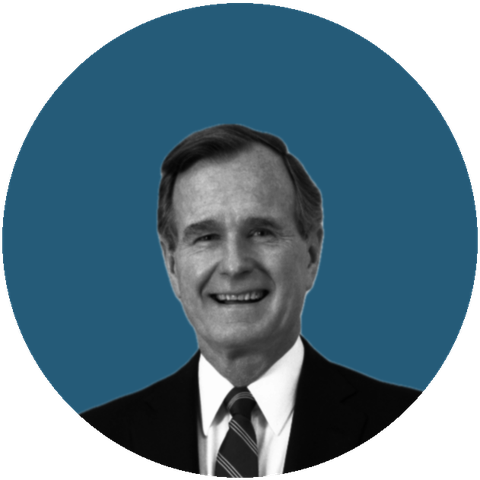
#7 H.W. Bush
89–93 · Republican
Near the bottom on most measures. Ranked in the top 3 on 0 measures, bottom 3 on 4.
Context: Strong economy, rising debt. S&L crisis, Gulf War.
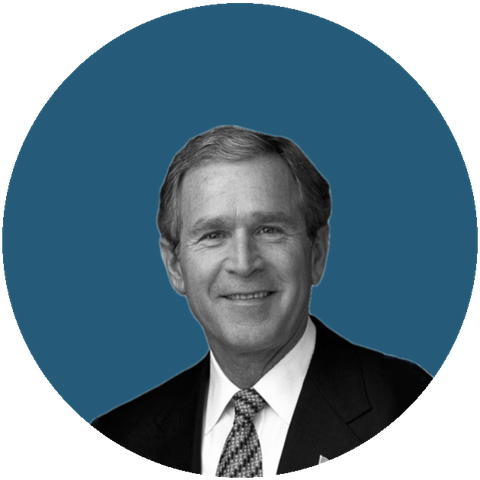
#8 W. Bush
01–09 · Republican
Near the bottom on most measures. Ranked in the top 3 on 1 measure, bottom 3 on 5.
Context: Surplus, dot-com bust beginning. 9/11, Iraq/Afghanistan wars, 2008 crash.
What this ranking can and can't tell you: It treats every metric equally, income counts the same as debt, jobs the same as inflation. Reasonable people disagree on which matters most. It also can't account for what a president inherited. Someone who walks into a crisis and cleans up most of it might still rank below someone who inherited a boom and coasted. The context cards in each question section exist for exactly this reason.
And it isn't a scorecard for a party or for one-party rule, the economy doesn't track who controls Washington. Clinton's boom came mostly after he lost Congress in 1994; George W. Bush had four years of unified Republican control and the weakest record here; Reagan never held the House at all. Growth and recessions ride on the business cycle, the Federal Reserve, and the world economy as much as on anyone in office.
A fairer score: who worked across the aisle?
Counting bipartisan laws alone isn't fair, some presidents controlled all of Congress, others got their deals filibustered. So this blends four things, bigger laws count more, and you decide how much each one counts. Drag the sliders.
#1
#2
#3
#4
#5
#6
#7
#8
Trump II · 2025–now · in progress
35
Bigger laws count about 3× smaller ones, and no president is marked "bad", the score only measures cross-party governing. There's no single "correct" weighting, which is why you set the sliders. Full logic, sources, and caveats are in "How this score works" just below.
How this score works, and what it can't tell you
The four things we measure
1. Bipartisan laws. Of a president's landmark laws, the share that passed with real support from both parties, not just a stray crossover vote or two.
2. Tried but blocked. Bipartisan or majority-backed bills the president championed that won a floor majority or passed a chamber and then died, filibustered, or the other chamber refused to take them up. Credit for building a coalition the system wouldn't let through.
3. Faced divided government. How much of their tenure the other party controlled the House or Senate. Under divided government, working across the aisle is the only path, and a harder one.
4. Filibusters faced. How obstructed the Senate was, cloture motions filed per Congress, measured against the all-time peak.
Why you set the weights
There is no objectively "correct" way to weigh these against each other, any fixed weights would bake in our judgment. So we hand you the sliders (they start at 40 / 20 / 20 / 20). Move them and the ranking re-sorts. The site shows the ingredients; you decide the recipe.
How we size "major" vs. "minor"
We don't eyeball it. Significance follows David Mayhew's long-running "important enactments" framework, the standard tool scholars use to separate landmark laws from routine ones, and for laws too recent for it to cover, we tier a bill "major" only where multiple neutral sources agree. Major laws and major blocked efforts count about 3× notable ones.
The same bar for everyone, even when it produces a zero
The "tried but blocked" rule is applied identically to all eight presidents. That is why Trump I shows a zero there: his blocked priorities (ACA repeal, the border wall) were party-line bills the opposition stopped, not bipartisan coalitions, and the one bipartisan immigration deal that had the votes in 2018 was one he opposed and threatened to veto, so it isn't his to claim. His bipartisan wins that did pass (First Step, CARES, USMCA) are credited under the first factor. Fair means consistent, even when consistency produces an uncomfortable number.
What it can't tell you (the honest limits)
• Congress writes and passes laws; the president signs them and sets the agenda. This is a signal about the era as much as the person, a willing president can be starved by a Congress that refuses to deal.
• The filibuster count includes cloture on nominations, not just bills. Since rule changes in 2013 and 2017 made nomination cloture routine and majority-only, the most recent presidents' filibuster numbers run high; a bills-only count would pull them down. We use the full series because it's the one the Senate publishes consistently, and flag the caveat right here.
• Significance tiers reduce judgment calls but don't eliminate them.
• The voter-support figures in the receipts are polling (opinion, not a measured outcome) and are labeled that way.
• Trump II's term is still in progress, so its score is partial.
Sources (all clickable)
Roll-call vote totals: congress.gov ↗ senate.gov roll calls ↗ House Clerk ↗ GovTrack ↗.
Filibusters: U.S. Senate cloture record ↗. Significance tiers: David Mayhew, "Divided We Govern" important-enactments dataset ↗.
Voter polling: Gallup (marriage) ↗ Pew (gun policy) ↗ Kaiser Family Foundation (ACA) ↗.
The receipts: every landmark law
The evidence behind the score, every landmark law, how it passed, and the bipartisan bills that got blocked. Bigger (major) laws count more in the score than smaller (notable) ones.
Reagan
1981–1989 · Republican
4 bipartisan · 0 party-line
+1 tried, blocked
Economic Recovery Tax Act (1981)Major✓ BipartisanHouse 238–195 · Senate 89–11 ↗ Reagan's tax cut drew 48 House Democrats and sailed through the Senate 89–11.
Social Security Rescue (1983)Major✓ BipartisanHouse 243–102 · Senate 58–14 ↗ The bipartisan Reagan–O'Neill deal that shored up Social Security.
Tax Reform Act (1986)Major✓ BipartisanHouse 292–136 · Senate 74–23 ↗ A rare overhaul both parties owned, Democratic Speaker Tip O'Neill backed it.
Immigration Reform & Control Act (1986)Major✓ BipartisanHouse 238–173 · Senate 63–24 ↗ Immigration reform with amnesty, passed by majorities of both parties.
Immigration reform (Simpson–Mazzoli) (1982)Major✗ Tried, BlockedPassed the Senate; House let it die
Reagan-backed bipartisan immigration reform passed the Senate but stalled in the House for years.
GovTrack ↗Context: Worked with a Democratic-controlled House all eight years, in a low-filibuster era of frequent cross-party deals.
H.W. Bush
1989–1993 · Republican
3 bipartisan · 0 party-line
+1 tried, blocked
Americans with Disabilities Act (1990)Major✓ BipartisanHouse 377–28 · Senate 91–6 ↗ Landmark disability-rights law, near-unanimous in both chambers.
Clean Air Act Amendments (1990)Major✓ BipartisanHouse 401–25 · Senate 89–11 ↗ Major anti-pollution overhaul, written and passed by both parties.
Civil Rights Act (1991)Notable✓ BipartisanHouse 381–38 · Senate 93–5 ↗ Restored job-discrimination protections the Court had narrowed; overwhelming bipartisan votes.
Capital-gains tax cut (1989)Major✗ Tried, BlockedPassed the House 239–190; Senate leaders blocked a floor vote
Bush's top economic priority drew cross-party support in the House, but Senate Democrats never let it reach the floor.
congress.gov ↗Context: Faced a Democratic House and Senate his entire term, every major win needed the other party.
Clinton
1993–2001 · Democrat
3 bipartisan · 1 party-line
+1 tried, blocked
Family & Medical Leave Act (1993)Notable✓ BipartisanHouse 265–163 · Senate 71–27 ↗ Job-protected family leave; 16 Senate Republicans crossed over to pass it.
NAFTA Implementation (1993)Major✓ BipartisanHouse 234–200 · Senate 61–38 ↗ Trade deal passed by a Republican-plus-centrist-Democrat coalition.
Deficit-Reduction Budget (OBRA) (1993)MajorParty-LineHouse 218–216 · Senate 51–50 ↗ Clinton's deficit plan passed with zero Republican votes; Gore broke a 50–50 Senate tie.
Welfare Reform (PRWORA) (1996)Major✓ BipartisanHouse 328–101 · Senate 78–21 ↗ Overhaul of cash welfare; about half of Democrats joined nearly all Republicans.
Campaign-finance reform (McCain–Feingold precursor) (1998)Major✗ Tried, BlockedPassed the House; filibustered in the Senate
Bipartisan campaign-finance reform cleared the House but was filibustered in the Senate until 2002.
GovTrack ↗Context: Two years of unified Democratic control, then lost both chambers in 1994 and governed against a Republican Congress.
W. Bush
2001–2009 · Republican
3 bipartisan · 0 party-line
+1 tried, blocked
No Child Left Behind (2001)Notable✓ BipartisanHouse 381–41 · Senate 87–10 ↗ Education-standards law co-written with Ted Kennedy; lopsided bipartisan votes.
Medicare Rx Drug Benefit (2003)Major✓ BipartisanHouse 220–215 · Senate 54–44 ↗ Added prescription-drug coverage; narrowly passed with crossover from both sides.
Bank Bailout (TARP) (2008)Major✓ BipartisanHouse 263–171 · Senate 74–25 ↗ 172 House Democrats and 91 Republicans together got the financial-crisis rescue over the line.
Comprehensive Immigration Reform Act (S. 2611) (2006)Major✗ Tried, BlockedPassed the Senate 62–36; House refused to take it up
A bipartisan Senate majority (39 Democrats and 23 Republicans) passed Bush's immigration overhaul; the House never acted.
congress.gov · S.2611 ↗Context: Unified Republican control from 2003–2007; broad post-9/11 bipartisanship early, but second-term priorities stalled.
Obama
2009–2017 · Democrat
6 bipartisan · 3 party-line
+3 tried, blocked
Recovery Act (Stimulus) (2009)MajorParty-LineHouse 246–183 · Senate 60–38 ↗ The recovery package passed with no House Republicans and just three in the Senate.
Affordable Care Act (2010)MajorParty-LineHouse 219–212 · Senate 60–39 ↗ Obamacare cleared both chambers with zero Republican votes.
Dodd-Frank Wall St. Reform (2010)MajorParty-LineHouse 237–192 · Senate 60–39 ↗ Wall Street reform drew only three Republicans in each chamber.
Tax Relief Act (2010)Major✓ BipartisanHouse 277–148 · Senate 81–19 ↗ The Obama–GOP tax-cut extension; big majorities of both parties (the 'no' votes were mostly progressives).
Budget Control Act (2011)Major✓ BipartisanHouse 269–161 · Senate 74–26 ↗ The debt-ceiling deal drew majorities of both parties in the Senate.
American Taxpayer Relief Act (2013)Major✓ BipartisanHouse 257–167 · Senate 89–8 ↗ The fiscal-cliff deal; the Senate backed it 89–8 and 85 House Republicans joined in.
Every Student Succeeds Act (2015)Notable✓ BipartisanHouse 359–64 · Senate 85–12 ↗ Replaced No Child Left Behind with broad bipartisan support, 85–12 in the Senate.
FAST Act (highways) (2015)Notable✓ BipartisanHouse 359–65 · Senate 83–16 ↗ Five-year highway and transit funding, broadly bipartisan.
21st Century Cures Act (2016)Notable✓ BipartisanHouse 392–26 · Senate 94–5 ↗ Biomedical research and opioid funding; near-unanimous in both chambers.
DREAM Act (2010)Major✗ Tried, BlockedPassed the House; Senate 55–41 (filibustered)
A Senate majority backed legal status for young immigrants, but it couldn't reach the 60-vote threshold.
GovTrack ↗Background checks (Manchin–Toomey) (2013)Major✗ Tried, BlockedSenate 54–46 (filibustered)
A bipartisan majority (including four Republicans) voted yes after Sandy Hook; 60 was the wall.
GovTrack ↗Comprehensive immigration reform (2013)Major✗ Tried, BlockedPassed the Senate 68–32; House refused to take it up
A bipartisan supermajority passed it with 14 Republicans; the House never gave it a floor vote.
congress.gov · S.744 ↗Context: Unified control for two years, then lost the House in 2010 and the Senate in 2014, governing through the most filibuster-heavy era on record.
Trump I
2017–2021 · Republican
5 bipartisan · 1 party-line
Tax Cuts & Jobs Act (2017)MajorParty-LineHouse 224–201 · Senate 51–48 ↗ The tax cut passed on party lines, every Democrat voted no.
First Step Act (2018)Notable✓ BipartisanHouse 358–36 · Senate 87–12 ↗ Criminal-justice reform; all Democrats in favor and every no vote came from Republicans.
Families First Coronavirus Response Act (2020)Notable✓ BipartisanHouse 363–40 · Senate 90–8 ↗ Early-COVID paid leave and testing; 140 House Republicans joined every Democrat.
CARES Act (2020)Major✓ BipartisanHouse voice vote · Senate 96–0 ↗ The $2.2T pandemic relief passed the Senate 96–0 and the House by voice vote.
Consolidated Appropriations (Dec COVID relief) (2020)Notable✓ BipartisanHouse 359–53 · Senate 92–6 ↗ The December 2020 ~$900B COVID relief and omnibus; lopsided bipartisan.
USMCA Trade Deal (2020)Notable✓ BipartisanHouse 385–41 · Senate 89–10 ↗ The updated NAFTA passed 89–10 in the Senate and 385–41 in the House.
Context: Unified control for two years, then a Democratic House; the biggest bipartisan votes came on COVID relief and trade.
Biden
2021–2025 · Democrat
5 bipartisan · 2 party-line
+1 tried, blocked
American Rescue Plan (2021)MajorParty-LineHouse 220–211 · Senate 50–49 ↗ The $1.9T COVID package passed with zero Republican votes.
Infrastructure Investment & Jobs Act (2021)Major✓ BipartisanHouse 228–206 · Senate 69–30 ↗ Roads-and-bridges law; 19 Senate and 13 House Republicans joined in.
CHIPS & Science Act (2022)Notable✓ BipartisanHouse 243–187 · Senate 64–33 ↗ Semiconductor and research bill; 17 Senate Republicans backed it.
Inflation Reduction Act (2022)MajorParty-LineHouse 220–207 · Senate 51–50 ↗ Climate, tax and health bill passed with zero Republican votes; Harris broke the tie.
Bipartisan Safer Communities Act (2022)Notable✓ BipartisanHouse 234–193 · Senate 65–33 ↗ First major gun-safety law in decades; 15 Senate Republicans crossed over.
Respect for Marriage Act (2022)Notable✓ BipartisanHouse 258–169 · Senate 61–36 ↗ Codified same-sex and interracial marriage with dozens of Republican votes.
Voters (polling) Democrats 87% ·
Republicans 55% backed it, yet only ~1 in 5 House Republicans voted yes.
Gallup 2022 ↗ Honoring our PACT Act (2022)Notable✓ BipartisanHouse 342–88 · Senate 86–11 ↗ Veterans' toxic-exposure care, passed 86–11 in the Senate.
Bipartisan border-security deal (Lankford–Murphy–Sinema) (2024)Major✗ Tried, BlockedNegotiated bipartisan; Senate blocked it 49–50 after support was pulled
A months-long bipartisan border deal collapsed after Republican support was withdrawn.
GovTrack ↗Context: A 50–50 Senate and a narrow House for two years, then a Republican House; paired party-line reconciliation bills with bipartisan deals.
Trump II
2025–now · Republican
3 bipartisan · 1 party-line
Laken Riley Act (2025)Notable✓ BipartisanHouse 263–156 · Senate 64–35 ↗ The term's first law; 12 Senate and 46 House Democrats joined Republicans.
HALT Fentanyl Act (2025)Notable✓ BipartisanHouse 321–104 · Senate 84–16 ↗ Permanently scheduled fentanyl-related drugs; broad support from both parties.
GENIUS Act (stablecoins) (2025)Notable✓ BipartisanHouse 308–122 · Senate 68–30 ↗ The first U.S. crypto law; 102 House and 17 Senate Democrats joined in.
One Big Beautiful Bill Act (2025)MajorParty-LineHouse 218–214 · Senate 51–50 ↗ The sweeping tax-and-spending reconciliation law passed with zero Democratic votes; Vance broke the tie.
Context: Unified Republican control; term still in progress.
Blocked = a bill the president backed that won a majority or passed a chamber, then died. Vote totals are verified final-passage tallies from congress.gov, senate.gov, and the House Clerk. Full scoring logic and caveats are in the methodology above.
The other scorecard: Approval, Trust & Promises →
How Americans judged them: Gallup approval, the party gap, character traits, PolitiFact promise-tracking, and C-SPAN historian rankings. Lives in the Stability section.
When the president's people break the law, what happens?
Same format for every president: what was alleged, who investigated, how long it took, what it cost, and what it produced. The counts aren't labeled good or bad; they just are. An investigation that produced nothing (Benghazi: 10 inquiries, 0 indictments, $7.8M) shows that as plainly as one that produced convictions.
FRAMING RULE: Present each investigation with the same format, what was alleged, who investigated, how long, what it cost, what it produced (indictments, convictions, acquittals, pardons). NO labels of 'hit job' or 'real scandal.' Let the outcomes speak. The pattern tells the story.
Of administration officials, during the presidency
2 major investigations, show detail
Iran-Contra Affair
Alleged: Secret arms sales to Iran to fund Nicaraguan rebels, violating Congressional ban
Investigator: Independent Counsel Lawrence Walsh (appointed by court)
Duration: 1986-1993
Outcome: 14 charged, 11 convicted. Oliver North conviction overturned on appeal. 6 pardoned by HW Bush before trial.
Did the president know?: Reagan claimed not to remember. Tower Commission found he 'should have known.'
HUD Scandal
Alleged: Fraud, corruption and influence-peddling in Dept of Housing and Urban Development
Investigator: Independent Counsel
Outcome: 18 indicted, 16 convicted
Of administration officials, during the presidency
1 major investigation, show detail
Iran-Contra pardons
Alleged: Pardoned 6 Iran-Contra figures including Caspar Weinberger before trial
Outcome: Legal but politically controversial. Walsh called it 'the cover-up of the cover-up.'
Of administration officials, during the presidency
1 major investigation, show detail
Whitewater / Lewinsky / Impeachment
Alleged: Originally: real estate dealings in Arkansas. Expanded to: perjury regarding relationship with Monica Lewinsky
Investigator: Independent Counsel Kenneth Starr (appointed by court)
Duration: 1994-2000
Cost: ~$70 million
Outcome: Impeached by House on perjury and obstruction. Acquitted by Senate. No criminal charges on original Whitewater allegations.
Of administration officials, during the presidency
3 major investigations, show detail
Plame Affair
Alleged: Leaking identity of CIA officer Valerie Plame, potentially as retaliation against her husband's criticism of Iraq War intelligence
Investigator: Special Counsel Patrick Fitzgerald
Outcome: Scooter Libby (VP Cheney's chief of staff) convicted of perjury and obstruction. Sentence commuted by Bush, later pardoned by Trump.
US Attorney Firings
Alleged: Political motivation behind firing 8 US Attorneys
Outcome: AG Alberto Gonzales resigned. No criminal charges.
Abu Ghraib / Torture
Alleged: Prisoner abuse at Abu Ghraib; CIA enhanced interrogation (torture) program
Outcome: 11 soldiers convicted. No charges against senior officials who authorized the program.
Of administration officials, during the presidency
3 major investigations, show detail
Benghazi
Alleged: Failure to protect US diplomatic compound in Libya; alleged cover-up of attack circumstances
Investigator: 10 Congressional investigations (6 Republican-led)
Duration: 2012-2016
Cost: ~$7.8 million (House Select Committee alone)
Outcome: 0 indictments. 0 convictions. No evidence of cover-up or stand-down order found by any investigation including Republican-led ones.
IRS Targeting
Alleged: IRS unfairly scrutinized Tea Party groups applying for tax-exempt status
Outcome: IG found 'inappropriate criteria' were used. No evidence of White House direction. IRS apologized. No charges.
Fast and Furious
Alleged: ATF gun-walking operation allowed weapons to reach Mexican drug cartels
Outcome: AG Holder held in contempt of Congress. No criminal charges against administration officials.
Zero administration officials indicted or convicted. Petraeus (CIA Director) pled guilty to misdemeanor for sharing classified info with his biographer, not connected to Obama policy.
Of administration officials, during the presidency
3 major investigations, show detail
Mueller Investigation (Russia)
Alleged: Russian interference in 2016 election; possible coordination with Trump campaign; obstruction of justice
Investigator: Special Counsel Robert Mueller (appointed by DOJ)
Duration: 2017-2019
Cost: ~$32 million (but seized $42 million in Manafort assets, net positive to government)
Outcome: 34 indictments, 8 convictions/guilty pleas (Manafort, Flynn, Cohen, Stone, Gates, Papadopoulos, van der Zwaan, Pinedo). 26 Russian nationals/entities indicted. Mueller found 'sweeping and systematic' Russian interference. Did NOT establish criminal conspiracy with campaign. Documented 10 instances of potential obstruction but declined to charge sitting president per DOJ policy.
First Impeachment (Ukraine)
Alleged: Pressuring Ukraine to investigate Biden in exchange for military aid
Investigator: House Intelligence Committee
Outcome: Impeached by House. Acquitted by Senate (52-48, party-line except Romney voted to convict on one count).
Second Impeachment (Jan 6)
Alleged: Incitement of insurrection at the Capitol on January 6, 2021
Investigator: House
Outcome: Impeached by House (10 Republicans voted yes). Acquitted by Senate (57-43, 7 Republicans voted to convict, most bipartisan impeachment vote ever, but short of 67 needed).
After leaving office: Indicted on 91 felony counts across 4 cases (federal classified documents, federal Jan 6 conspiracy, Georgia election interference, NY business fraud). Convicted on 34 felony counts in NY. Federal cases dropped after DOJ policy memo. Georgia case stalled.
Of administration officials, during the presidency
2 major investigations, show detail
Special Counsel (classified documents)
Investigator: Special Counsel Robert Hur
Outcome: No charges filed. Hur described Biden as 'elderly man with a poor memory', controversial characterization but no criminal liability found.
House Impeachment Inquiry
Alleged: Business dealings of Hunter Biden; alleged influence-peddling
Investigator: House Oversight Committee (Republican-led)
Outcome: Investigation produced no articles of impeachment. No evidence found that Biden personally profited or took official action on behalf of Hunter's business partners.
Hunter Biden convicted on federal gun charges and pled guilty to tax charges. Pardoned by Joe Biden in December 2024. Not administration officials.
Of administration officials, during the presidency
3 major investigations, show detail
DOGE / Musk government access
Alleged: Unelected billionaire given access to federal systems and personnel authority
Outcome: Ongoing
Status: Multiple lawsuits filed, courts have blocked some actions
Inspector General firings
Alleged: Fired multiple IGs across agencies in January 2025
Status: Legal challenges ongoing
IGs are the primary internal anti-corruption mechanism in federal government
FCPA enforcement pause
Alleged: Paused enforcement of Foreign Corrupt Practices Act
Transparency International flagged this as 'dangerous signal that corrupt business practices may be tolerated'
Too early for full assessment. Ongoing investigations and legal challenges across multiple fronts. First convicted felon to serve as president.
⚠ Trump II data is inherently incomplete, track and update as outcomes materialize.
The pattern, side by side: When laid out side by side with identical formatting, the data shows: Carter 0, Reagan 33, HW Bush 1, Clinton 2, W Bush 16, Obama 0, Trump I 34+91, Biden 0. The project presents this without commentary, the numbers speak. For investigations that produced nothing (Benghazi: 10 investigations, 0 indictments, $7.8M spent), the format makes that visible. For investigations that produced convictions, the format makes that visible too. No labels needed.
Source: PolitiFact, FiveThirtyEight, Rantt Media, Washington Monthly, Wikipedia List of American Federal Politicians Convicted of Crimes. Cross-referenced across multiple sources.
$4.5BOutside spending in the 2024 election, up from about $143M in 2008. Money in politics is one thing that grew no matter who was in charge.OpenSecrets
Corruption & money in politics
Three system-level measures that cut across every administration: how corrupt the U.S. is perceived to be, how much industries spend to lobby, and how much outside money flows into elections.
Is the U.S. seen as more or less corrupt over time?
More corrupt, in the world's eyes. The U.S. scored 64 out of 100 in 2025, its lowest ever, down 12 points over the previous decade.
This is PERCEIVED corruption, not measured corruption. But perception drives trust, and the trend is stark. The 2025 score (64) is the lowest the US has ever received. TI explicitly flagged 'use of public office to target independent voices and undermining of judicial independence' as concerning developments.
Public perceptionSource: Transparency International CPI (transparency.org). Scale 0 (highly corrupt) to 100 (very clean).
How much do industries spend to influence Washington?
More than ever, federal lobbying nearly tripled from $1.45B (1998) to $4.4B (2024), led for 25 years straight by the pharmaceutical industry.
Measured outcomeSource: OpenSecrets (opensecrets.org) based on Senate Office of Public Records filings
How much outside money flows into elections?
It exploded after the 2010 Citizens United ruling, from $143M (2008) to $4.5B (2024), a 31× jump in sixteen years.
Citizens United v. FEC was decided January 2010. Outside spending exploded immediately after.
Measured outcomeSource: OpenSecrets